Showing posts with label Marketers. Show all posts

Monday, 27 September 2010

Is CRM Right For You? A 15-Minute Quiz

Do you believe in magic?

Marketers tend to. They are suckers for miracle cures - and here's why.

We all know our customers are lazy. That's why the words "quick" and "easy" always increase readership of any headline.

Show them how they can do something - lose weight, learn a language - with less effort, and you probably have a winning proposition.

You must package it well, though - preferably with an impressive name.

So it's not listening to and repeating words and phrases; it's "programmed learning". That makes you feel you're doing something important, doesn't it?

And guess what? Marketers are just as lazy as customers - hardly surprising, as they are customers every day. Most (as I learned from asking them to define it in many countries) are is too lazy to even learn what marketing is - let alone what "direct marketing" means.

Anyhow, that word "direct" ... doesn't it sound distressingly close to direct mail? And we all know what that means, don't we? Junk. Ugh. That certainly doesn't sound very flattering, does it?

CRM sounds much better. People love it. Though I cannot for the life of me see how it differs from what I've always done.

Mind you, it took me about nine years to get any good at what I do, whereas a few years ago Oracle's ads said: "Start today and have global customer relationship management in 19 days."

Sounds a lot better than hard work, doesn't it? Mr. Super CRM would whiz into their office and take care of everything for them! No wonder it took off.

Many firms started CRM divisions before even knowing what the heck it really was - or meant to their business.

No wonder that a few years after it first came into fashion, the US magazine Advertising Age reported that over 70% of firms who tried it said it didn't work.

I shall discuss why in a moment, with some good, practical advice you can act on from somebody who has specialised in this field.

In the meantime, here's a little reminder that miracles only happen in the movies.
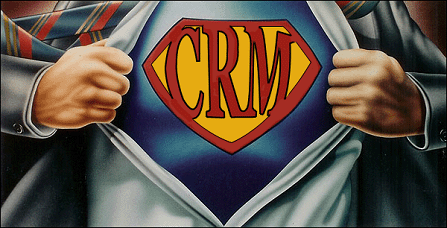


The word 'loyalty' is often used about CRM. But as a former chairman of Marks & Spencer observed, "Customers are not loyal nor should they be. We have to earn their loyalty every day".

His firm forgot that and it nearly ruined them.

Sober people know the obvious: nobody sane wants a relationship with their bank or supermarket. They have enough trouble getting on with their families. And a "programme" won't cure any dodgy relationship.

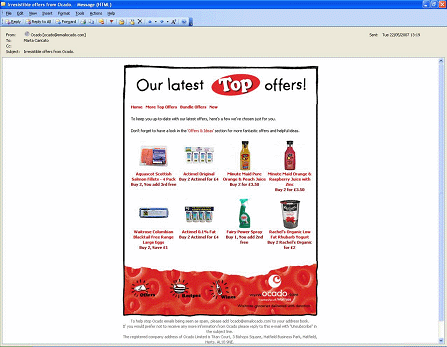
But the intelligent use of data does pay. Here is a good example. Ocado sent my partner Marta this, based on things she had bought before.


CRM schemes fail above all because your business lives or dies on its attitude to customers. And a quick fix doesn't change attitudes.

So here is check list for you. It was put together by my associate Peter Hardingham, who has worked with me on and off for 20 years, and revised by me because I interfere with everything that leaves this office.

Is CRM right for you? A 15-minute quiz

Step 1

Unless you have answered these four questions, there is absolutely NO point in boarding the good ship CRM.

  • Do you really know what your customers want?

  • Do you know what they think you promise them? Are they the same things?

  • Can you clearly identify these desires and beliefs, before and after they have become customers?

  • How will you find out? Do so before anything else!


Step 2

Set realistic expectations, and deliver what you promise or you can end up worse off than if you never started.

  • Can you deliver what your customers want - and, just as important, what they think you promise?

  • If not, what can you deliver now, and in the future?

  • If it is in the future, how quickly? And how will you keep them happy in the interim?


Step 3

A customer in the dark is an angry customer. A customer in the know can end up buying more.

  • At what points in the purchase process will you tell your customers what they want to know

  • About their order?

  • To reassure them?


Step 4

  • Can you identify the points from step 3 in every customer transaction?

  • Are you sure your IT team can deliver?

  • If you have retail outlets, can the staff get this information - quickly and easily?


Step 5

Many firms still have separate databases for customer and transactional information If your marketing database can't access both, you're in trouble.

  • Can you record what happens at all every point in the transaction?

  • On a database all those who may need to know can access?


The moment of truth.

Did you answer the first 5 steps mostly 'yes'? If so, you stand a chance of CRM working for you. If you said mostly 'no', stop right now and get it right.

If you're talking to CRM consultants politely ask them to leave. Their time is expensive, and you'll lose your shirt.

Step 6 - start the ball rolling

  • Tell your customers what you plan to do

  • Manage their expectations

  • Involve, motivate and train all your

  • Make sure everyone - particularly retail staff - gets the same respect


Step 7 - attend to detail

Remind yourself what you've promised, and deliver it. Often, essential processes are not part of firms' structures. They don't appreciate what skills and structures you need.

  • If this is an incentivised scheme, how will points, miles or other benefits be allocated, captured, and communicated to the customer?

  • How will redemptions be handled?


Step 8

Most customers won't tell you they are unhappy. They tell their friends - and walk away.

  • Set up a monitoring process in your company

  • Make sure you identify any weak links that appear in the chain


Step 9

  • Ask your customers how they think you're doing

  • Loyalty can improve just by making it easy for them to tell you what they think

  • Allow your customers to suggest improvements. It's the best research you'll ever get


Step 10 - it doesn't stop

Don't imagine this is something you just "put in place".

  • Keep listening to your customers

  • Keep learning from your customers

  • Keep refining your system

  • Keep training and re-training your people


When should you refer to these questions?

When your IT director says, "We've got this wonderful CRM software..."

When the board says, "That's a brave move you're making there, this CRM stuff..."

Just take out this quiz, and re-read it. You'll know more than many CRM consultants. You might even keep your job.

If that interested you, you might find half an hour with Peter worth your while. I sent him along to three clients a while ago, and all wanted to know more. One - a travel destination - had him on a plane within a week.

Best,
Drayton
www.directmarketingcourse.com
www.commonsensedirectmarketing.com

Thursday, 13 May 2010

How To Turn Your Ideas Into High-Priced Information Products

Have you heard of Eben Pagan? or David DeAngelo? That's a trick question, because he's the same guy.

Eben Pagan, or rather David DeAngelo, is the mastermind behind the Double Your Dating site. An Information Product business he has grown to almost $30 Million in sales - starting out at his computer in his bedroom...

http://gurublueprint.directanddigitalmarketing.com/

At the end, he walks you through an exercise to target and identify the knowledge YOU have that you can turn into an "Information Product" to sell online (and if you own an Info business already, it will give you a new mindset that will really take your success to the next level).

There's also a free PDF download of the exercise for you to print out - which is cool.

In the video, you're going to learn:

  • How a simple eBook that was written in a few weeks became an "empire" of almost $30 Million in sales - with a business that's run FROM HOME

  • Important new insider trends in the Information Industry that you NEED TO KNOW if you want to succeed

  • The mistake that most Information Marketers make that prevents their products from succeeding

  • The key mindset shift that allows you to identify market and product opportunities... where there are buyers who NEED to buy Information Products - but don't have products to buy


And again, you'll get a free PDF "Blueprint" exercise (and step-by-step guidance through it) to target the knowledge you ALREADY HAVE that you can turn into an Information Product (or Coaching) that you can sell for high prices online.

This is a SUPER-high value honest view into an online money-making machine that will blow your mind.

Just opt-in to watch the video. No obligation, and you don't have to buy anything (in fact, there's nothing for sale on the website). Go check it out now:

http://gurublueprint.directanddigitalmarketing.com/

Best,
Rezbi

Tuesday, 20 April 2010

Do Your Sales Messages Do What A Salesman Would Do?

This is a blinding glimpse of the obvious - yet completely ignored by most marketers. But unlike the first, it comes with a special offer you might find even more helpful.

More on that in a moment, because first I'd like you to join me you on a journey back in time.

If you study advertising - and I imagine you do, or how can you improve? - you will notice that most is very bad. A good example from people who should know better ran a while ago on the London Underground. It was a poster from the Advertising Standards Authority which read:

"We're here to make advertising better. Not to make better advertising. (Sorry.)"

This is what I call "creative masturbation" - produced entirely to please the writer, with no discernible purpose whatever. It does absolutely nothing to satisfy the question in every reader's mind: "What's in it for me?"

But what do they mean by "better" advertising? More original? More "creative" - which for many means the same thing? Or with more "impact" - whatever that means?

Did you say, "yes" to one or more of the above? If you trust the real giants of the industry, they are all wrong.

To explain why, let me take you to a modest office above a bar in Chicago 103 years ago. There the first good definition of advertising emerged. Even now many marketers - even very big ones - don't know it; but those who do have a priceless advantage.

Until then many vague phrases were used to describe advertising and how to do it. Most famous was the motto of A.J. Ayer, then the leading US agency. They said to get good advertising you must "Keep everlastingly at it". True; but not very helpful.

The office above the bar belonged to Lord & Thomas, a small firm destined to enjoy enormous success as a result of that evening. The intellectual curiosity of a young man who had just started running the firm had led him to seek a clear definition of his profession.

He was Albert Lasker, and he went on to make more money from advertising than anyone else, before or since. He realised that the way you define what you do determines what you do.

What built some of the world's biggest brands

On that night I mentioned a man in the bar below. He sent him up his card with a note saying: "I know you want to know what advertising is. I have the answer. Send back the card, and I will come and tell you".

So Lasker sent the card back, and a few minutes later a tall, striking moustachioed ex-Canadian Mountie called John E. Kennedy entered. He said to Lasker: "Advertising is salesmanship in print". Remembering that media now encompass not just print, but radio, the cinema, TV and the internet, that definition still stands.

Lasker hired Kennedy, and Lord & Thomas set out to spread the gospel of salesmanship in print. Before the end of World War 1 they were the world's largest advertising agency, which they remained until Lasker - who worked so hard he had regular nervous breakdowns - was away from the office for a while, and J. Walter Thompson overtook them.

Bad advertising is advertising which doesn't sell (and an amazing amount doesn't) or is aimed at satisfying the egos of those who create or run it - the clients - more than making sales.

In fact most creative people are more interested in awards than sales. That's not my opinion - just plain fact from research. They are keener on building their names than your sales.

So if you ever wonder why your stuff doesn't work, that's a good place to start: you're not reading from the same hymn sheet.

If it doesn't sell it isn't creative

Another early advertising titan, Claude Hopkins, succeeded Kennedy at Lord & Thomas. He put it this way: "Instead of sales, they seek applause".

Hopkins may have been the most able copywriter ever. He launched such famous brands as Quaker Puffed Wheat, Pepsodent and Chevrolet and his copy took a previously little known brand of beer, Schlitz, and quickly made it America's biggest seller.

He was so talented that Lasker hired him at the then un-heard of salary of...


I correspond with a lot of US internet experts. They operate in the newest, fastest growing medium.

Yet strangely enough they all know and have learned from a book first published in 1924. Scientific Advertising by Claude Hopkins is the shortest and, still, probably the best book on the subject ever written.

The shortest Chapter is called Just Salesmanship. If you read it you will know more about this business than most of the people in it. If you act on its lessons, I guarantee you will get better results.

In his introduction to the book, David Ogilvy says that nobody should have anything to do with this business until he has read the book 7 times.

Would you like it? Just insert you name and email address in the box on top right to download it.

$185,000 a year - when the dollar was worth 8 times more than now, and tax was almost nil.

Another legendary adman, Raymond Rubicam, noted, "The only purpose of advertising is to sell. It has no other justification worth mentioning". If you assume "sell" means to persuade anyone to do or believe something, it's hard to better that.

Bill Bernbach, named Adman of the 20th Century in Advertising Age, said, "All this talk of creativity has me worried. I fear lest in seeking the creativity we lose the sell".

What about originality? Well, Mozart - pretty creative, I think you will agree - said, "I never tried to be original in my life." And David Ogilvy said "Originality is the greatest sin in the advertiser's lexicon."

David practiced what he preached, too: he stole the line from his brother-in-law, Rosser Reeves, who invented the USP - Unique Selling Proposition.

At this point I bet you're wondering what my second helpful idea is. I've implied it but not said it. It is this. If you want your messages to work, just ask this simple question: Do they do what a salesman would do?

After all, if you could afford to, you would send the best salesmen you have round to every prospect. All other media are just substitutes for the real, live thing.

When we get a new client, if they use salespeople we usually get one to give us a live sales pitch. Then we try and replicate this in other media. The person who delivers that pitch gets his or her bread and butter from it. Nothing could be more powerful.

In the first three months of this year one of our clients enjoyed a 30% increase in sales - at a time when their chief competitors are either in the doldrums or actually losing money.

I would love to say this is all because of us, but of course there are many other factors. However, most of their leads come from two pieces - direct mail and door-drops. They were based almost entirely on a 2 hour pitch one of their top salesmen gave us - of course, without knowing we were not genuine prospects.

By the way, I am just amazed at how few marketers read books. They are like the man I mentioned in my last piece - too busy fighting alligators to drain the swamp.

The swamp is in fact the swamp of ignorance.

Why spend years learning by trial and error when a weekend with one good book can put you miles ahead? If you'd like any suggestions, let me know.

Best,
Drayton

P.S.  This is number 52 of Drayton Bird’s 101 free helpful marketing ideas.  You can sign up on the link below for the rest.

—————————————–

Website: www.draytonbirdcommonsense.com / www.eadim.com

Click here to get 101 free helpful marketing ideas. Marketers from all over the world think they’re a pot of gold.

Sunday, 18 April 2010

A Tiny Change Can Triple Response

To my mind, one of the most interesting aspects of
any form of direct marketing is this: How small
changes can make such a huge difference in
response. Especially in headlines and subheadlines.

For example, a client reports adding a single letter
to a headline tripled response to an offer.

The first headline read:

Put More Cash Into Your Pocket

The new headline is:

Puts More Cash Into Your Pocket

The addition of the letter "s" to the word "put"
made a 300% difference. This is not a misprint!

Notice the addition of a single letter changes the
meaning of the word and implies an easier solution.

If this is not enough to convince any skeptic that
small changes, even a single letter, can make a
huge difference, I don't know what is.

Here are other examples whereby a single word or
phrase has made an enormous difference in
response.

First headline:

Learn the Secrets of Millionaire Copywriters

New headline:

Discover the Secrets of Millionaire Copywriters

This new headline more than doubled response.
This is undoubtedly because the word "learn"
suggests lots of hard work.

Another example.

First headline (on order form):

ORDER FORM

Second headline:

FREE TRIAL REQUEST

This is another 200 plus percent increase. Reason?
Consumers do not respond well to the word
"ORDER". While it's an extremely negative word,
the majority of marketers still overuse it.

The word "order" suggests spending money, which
no one likes.

Plus, no one likes to fill out forms. Not even
accountants!

Do you, dear reader, feel able to choose which of
two competing headlines is the winner and
produced the highest response based on actual sales
results?

** The Success Margin challenge **

I'll present three headlines which were tested
against each other. The body copy was the same in
each instance. The results varied significantly. The
winner produced sales increases of 145% to 212%
and 254% respectively.

Here they are:

1. (a) The Ultimate Tax Shelter
(b) Tax Shelter for all Incomes

2. (a) How to be a Successful Consultant
(b) What Makes a Consultant Successful?

3. (a) Do You Suffer Joint Pain?
(b) Do Your Joints Feel Like They Are on Fire?

Success Margin subscribers who choose all three
correctly will receive a special gift.

Dedicated to helping you constantly improve
response.

Your correspondent,
Ted Nicholas

—————

“This article appears courtesy of THE SUCCESS
MARGIN, the Internet’s most valuable success and
marketing e-zine. For a complimentary
subscription, visit http://www.tednicholas.com/

Monday, 29 March 2010

Brilliant Marketing: What the Best Marketers Know, Do and Say (Paperback)

Brilliant Marketing: What the Best Marketers Know, Do and Say


Marketing. Everyone knows it’s really hard to do well and marketers have never been under so much pressure. More questions are being asked about value and effectiveness than ever before. We live in a world of turbulence and flux. This book gives you the tools and the motivation to deal with this change and to go out and be described as a brilliant marketer.  Brilliant Marketing answers key questions such as:• What is a brand? What is marketing and how is it changing? What is (more...)

Sunday, 21 March 2010

An Offer Just For You

Here's today's helpful idea - something for you to think about over the next day or so.


It relates to a promise I made yesterday about an offer which quite a few marketers have found extremely profitable over the last 11 months.

It's based on a simple fact many people ignore, which is this:

Good creative costs no more to run than bad creative and you can run it again and again and again - in fact, almost forever.

For instance a client tried out a simple phrase we suggested for their website order page over two years ago. Overnight their enquiries tripled. It's still there today.

Since that client is the second largest firm in their field turning over hundreds of millions, God alone knows how much that simple suggestion has made for them.

Does that sound like a good investment to you?

I imagine it does, unless you are one of those eccentrics who worry more about what something costs than what it makes.

(I don't suppose you are, or you wouldn't be reading these ideas, so here's the offer).


  1. Pick any communication, in any medium, that you'd like improved.

  2. We'll prepare something for half our usual rates.

  3. Do a split run.

  4. If we win ...give us another...or pay the full price.


It worked for them (at full price)...


Everest
Liverpool Victoria
Hargreaves Lansdown
RIAS
PruHealth
DHL
Central Capital
Warner Holidays
Inside Track


Why not you at half price?


This is one of those rare occasions where the words 'limited offer' happen to be true.

Not because I wouldn't like buckets of new business, but for a more important reason: it is that I value my reputation more than money.

I personally write or supervise everything that leaves our little office. On top of that, I only work with people who know what they are doing - an extremely small minority in this business, believe me.

We can only take on a maximum of 5 new clients who reply to email, maybe as I mentioned at the beginning, but last time I made this offer people replied almost instantly.

(Publisher's note: This offer may be no longer available.  Please leave a comment if you're interested and Drayton will be notified. We can't guarantee you a place.)

Best,
Drayton

P.S.  This is number 17 of Drayton Bird’s 101 free helpful marketing ideas.  You can sign up on the link below for the rest.

—————————————–

Website: www.draytonbird.com / www.eadim.com

Click here to get 101 free helpful marketing ideas. Marketers from all over the world think they’re a pot of gold.

The Drayton Bird Blog – please do not visit if you are easily offended.

Tuesday, 2 March 2010

Don't Tell Me You Like Me -- Show It

Until a few years ago I owned a couple of houses set between two towns on Normandy, both about the same size.


One - St Pierre-sur-Dives - has great character, with splendid buildings including a twelfth century hall where they hold antique markets on the first Sunday of the month. The other, some fifteen miles away - Vimoutiers - is a very dull contrast.


The differences lie not in the people, who are just as friendly, or the settings, which are beautiful, but in the fact that in 1944 the U.S. Air Force accidentally unloaded a lot of bombs on Vimoutiers, flattening the centre. To make up for this little accident they paid to re-build much of the town during the late '40's in the awful style of architecture then in fashion.


You might say the difference between the two towns derives from what we call 'bad targeting'. Even the most compelling message - and bombs are very compelling - is a waste (in this case a bloody disaster) if it reaches the wrong people.


This thought pre-occupied several correspondents in the letters page of the New York Times a while ago. They were discussing an odd but common practice: why do marketers spend so much on people who don't have much money, rather than people who do?


To be precise, why are they so obsessed with targeting young people, when old people have most of the money? I recall that in Marketing, a U.K. magazine I used to write for, someone revealed that 86% of over 50's do not relate to the messages advertisers produce.


One ingenious argument is that advertisers seek to catch people while they are forming their brand loyalties, rather than when they have become set in their ways. It suggests that old people don't like trying new things, so why bother with them?


This is complete balderdash, as anyone who has studied the real world knows. Old codgers not only have more money; they have more time. Time to try new things. A surprisingly high number got onto the Internet fairly early. Maybe this is because (as I fondly hope) old people are not as old as they used to be - reasonable if you look at life expectancy, which has risen greatly in most countries.


When I reached forty I was delighted to learn there was some truth in the maxim that life begins then. With every decade that has passed I have discovered new pleasures. I certainly have not stopped buying, and I may be more willing to try new ideas than ever. As you age, you realise you have less time left - but happily, you have more money. I suspect a lot of other older people are in the same happy boat.


A chief benefit of direct marketing is that - as David Ogilvy remarked - 'general advertisers can only guess: direct marketers know'. So the results of a mailing we conducted for a Scottish bank some years ago were particularly fascinating to me.


They had never written to their oldest customers, thinking they weren't worth bothering with - why worry them if they are not worrying you? But we suspected these people might be more willing to buy than they imagined. We softened them up with a one-page letter, which in effect said 'Thank you for being a customer'.


Research results exceeded my most optimistic expectations: 92% remembered that letter a month later. Recall is very well - agencies love talking about it - but what counts is, will people buy? Again, our most sanguine expectations were exceeded: when these people were subsequently offered various services, they bought in gratifyingly large numbers. That is what you call building measurable brand loyalty: don’t tell me you like me – show it.


A lot of bilge is talked about brand loyalty. The 100% brand loyal customer is about as rare as a vegetarian crocodile. As that wise man Professor Andrew Ehrenberg of the South Bank Business School pointed out for years, people choose from a portfolio of brands.


The truth is that ad agencies are full of young people, creating ideas to show off and win praise (and awards) from other young bloods. As David Ogilvy also noted, they squander their talents "skidding about helplessly on the slippery surface of irrelevant creative brilliance".


Turn on your TV any night. You'll see.


Best,
Drayton

—————————————–

Website: www.draytonbirdcommonsense.com / www.eadim.com

Click here to get 101 free helpful marketing ideas. Marketers from all over the world think they’re a pot of gold.

The Drayton Bird Blog – please do not visit if you are easily offended.

Saturday, 20 February 2010

Last Chance For Best Resale Rights Package of 2010

Mike Filsaime sent me an email a few minutes ago saying he'll be pulling his "first time ever" Resale Rights offer down within the next couple of days.

If you want to get resale rights to three of his best selling products...products even top marketers are using every day in their marketing...

...then make sure you hurry over there now:

http://directanddigitalmarketing.com/TheDayHisEgoDied.html

Keep in mind this isn't your typical resale rights offer where the seller paid some random "ghostwriter" to create some products and had some amateur copywriter write the salesletters.

These are PROVEN products which were created by Mike Filsaime that sell every day and have been for quite some time.

In fact, Mike wrote two of the three salesletters HIMSELF, and the other one was done by a high profile, high priced copywriter.

So you can rest assured that you are getting the rights to sell top quality products, one of which broke records in the Clickbank marketplace when it was first released.

And as I mentioned before, the other two are products you see being used by marketers all over the world... including some Gurus

http://directanddigitalmarketing.com/TheDayHisEgoDied.html

When you get there, you'll see he is also giving you instant free access to the products so you can see just how powerful and relevant they are in the market.

Plus you get to use them in your business as well.

But once he pulls the offer down, free access to these products go away too. Then you will have to pay for them.

Instant Download instructions can be found at:

http://directanddigitalmarketing.com/TheDayHisEgoDied.html

Hurry now before it's too late!

Thursday, 11 February 2010

Why Bother to Learn Copywriting?

Why should you bother to spend your valuable
time learning the fine art of copywriting?

Here's why.

Entrepreneurs can multiply their income by 10, 15,
or even 100 times when they can write sales copy.

Plus, you can make big money as a freelancer. The
business world desperately needs copywriters. And
that goes for all media, including magazines, news-
papers, direct mail and the Internet.

There are at least a dozen good reasons to learn the
secrets of writing great copy.

** What Learning How to Write Copy
Can Do For You **

1. Earn unlimited active and passive income from
upfront fees and royalties on sales. Many of my
readers and protégés routinely earn from $150,000
to over $500,000 per year. Some superstars earn
over $1,000,000 per year.

2. Become a far more successful executive or
entrepreneur. Your leadership skills will be much
stronger as you discover how to "walk in someone
else's shoes."

3. Become able to successfully market virtually
any product or service. You can market yourself
or your own business. Or service outside clients.
Or both.

4. Improve your ability to create a powerful
Unique Selling Proposition (U.S.P.) for any company
product or service. You'll discover how to
differentiate your company or yourself, which will
result in a higher level of success.

5. Discover no less than 7 psychological "hot
buttons" that cause people to buy. Most marketers
have no clue as to more than one or two of them.
You then will increase your success by becoming
better able to predict human behavior.

6. Live a lifestyle of which others only dream.
Enjoy more personal freedom to live and work
anywhere in the world. You can write successful
sales copy from a beautiful island, a great city, a
small town, or in any country in the world that
suits you best.

7. By becoming more articulate, you will
automatically improve your negotiating skills.
This enormously valuable trait will help you in
your business and your life.

8. Improved communication skills can result in
your being able to produce a wide variety of
income-producing products. These include
books, newsletters, e-zines, articles and special
reports. You'll find it's rewarding in many ways
to earn money while you sleep.

9. As you sharpen your communication skills,
you can become a far better public speaker, a
terrific asset in any job or business. And as a
highly paid consultant.

10. Become more appealing to others. As a
copywriter, by necessity you will discover that
rare quality of being able to change places with
others. This makes you a more sensitive, likable
person.

11. To succeed in business, you must learn to
sell effectively and without pressure. You will
master the dying art of effective salesmanship.
Successful copy is salesmanship in print.

12. You’ll become a far better judge of other
copywriters you may wish to hire or be
responsible to manage.

** Writers are made, not born **

Contrary to popular belief, you do not have to
be a born writer. I certainly was not.

Your correspondent,
Ted Nicholas

—————

“This article appears courtesy of THE SUCCESS
MARGIN, the Internet’s most valuable success and
marketing e-zine. For a complimentary
subscription, visit http://www.tednicholas.com/

Tuesday, 9 February 2010

Who Is Your Customer? Are You Sure?

Here's a couple of ways marketers often work to understand their customers. I bet you've come across them at seminars or in marketing magazines.

1. They segment them, using pretentious phrases, like "upwardly mobile" or creative language their research people have dreamt up so as to charge more - like dividing them up into different kinds of fruit or animals.

2. Sometimes they say "picture your customers - what they like or don't - then you can see them as human beings."

Well, in a minute I'll tell you a story one of my friends, Denny Hatch - among the smartest people I ever met - just told.

But first, let's play a little game.

1. Try to picture a group of prospects
2. Men aged 55-65 years
3. What do they look like?
4. What are their interests and hobbies?
Now follow this link and see who they are

Surprised? It's a way of pointing out that your customers are individuals, not types, which is why direct marketing is more relevant, by far, than mass advertising.

Peter Drucker said the aim of marketing is "To know and understand the customer so well that the product fits him and sells itself."

Only direct marketing can do that.

Today's point is: Know your customers as individuals - not types

Here's my friend Denny Hatch's story, which illustrates it wonderfully. (And I recommend you join his site, at www.businesscommonsense.com)

Wal-mart is dumping its 200 million customers into three silos:

There are "brand aspirationals" (people with low incomes who are obsessed with names like KitchenAid), "price-sensitive affluents" (wealthier shoppers who love deals), and "value-price shoppers" (who like low prices and cannot afford much more).

Will Wal-Mart's investment-in the new strategy of stocking and advertising new lines of upmarket merchandise-win it a larger share of market and share of wallet?

My bet is that doing it the old way is better.

A Bang & Olufsen Story

At some point in the 1970s, when we were living in Connecticut, I sold the screen rights to a novel and blew some of the money on a gorgeous Bang & Olufsen (B&O) stereo rig-the one that was in the Museum of Modern Art's permanent collection.

(Let me add that I wrote and had published three novels; all garnered a number of movie options over the years, but no film was ever made, alas.)

Many years later, I heard or read a story-somewhere-about B&O that resonated in my head. It seems that for years this Danish high-tech electronic company was operating on the premise that its products were being bought by upscale yuppies in the 25- to 40-year-old age group in the income range of $30,000 to $50,000.

Somewhere along the way, the company inserted warranty cards with survey forms in its packaging. A number of these were returned and promptly sent to headquarters where they were consigned to shoeboxes in a storage room.

Several years later, a new marketing person came across these surveys and, on a whim, sent them into one of the big direct marketing service bureaus to find out some information about the people that had filled them out. While many of the forms were out-of-date-people move, die, get married, etc.-enough matches were found to give B&O a picture of its customers.

It turned out that a huge majority of the ultra sleek Bang & Olufsen radios, turntables, tape decks and speakers were being bought by people that were 50+ years of age with $100,000+ incomes.

As a result, the company fired many of its distributors (including the guy around the corner from us in Philly), opened its own stores in malls and upscale shopping centers that matched the demographics of its buyers, and completely redirected its advertising to reach older, wealthier prospects.

Meanwhile, how much money did B&O leave on the table worldwide over the years with its old cockamamie "gut" approach to marketing that assumed its customers were yuppies when in fact they were not?

Never assume anything in business, as the old saying goes, because when we "assume" we make an "ass" out of "u" and "me."

So who are YOUR Customers? The Catalog Model.

I cannot think of any industry that is more in tune with its customers than catalogers. Using the RFM benchmark (Recency-Frequency-Monetary Value), they know the purchasing history of their customers and can rank them in quintiles or deciles.

A Seattle marketing guru once told a cataloger whose business was struggling, "You want to make money this quarter? Don't mail your bottom quintile."

In other words, the cataloger would spend more money on the mailing than he would take in from these poor-performing customers. Therefore, the money saved by not mailing would go directly to the bottom line.

Quite simply, a smart cataloger will mail the best customers a lot more often than the worst customers.

Ranking customers is only part of the catalogers' bag of marketing tricks:

* They have a record of every transaction, customer-by-customer, purchase-by-purchase. These data are aggregated so that the catalog marketer has an electronic dossier on every customer and-from the merchandise that has been shipped-can discern behavioral patterns: sports enthusiast, presence of children, loves high-tech gadgets, dresses casually, etc.

* Some catalogers go so far as to employ the technology of selective binding, tailoring each catalog to the buying history to specific customers and not wasting time on irrelevant offers.

* With the advent of co-operative databases, a cataloger's entire customer file can be modeled and matched against those of a thousand or more other catalogs in order to find new customers. He can then rent these "clones" of his existing customers and get far better results than blowing a buck on a book mailing to perfect strangers.

This is database marketing at is most elegant, efficient and profitable.

Can Other Businesses Benefit From the Catalog Model?

Having been the president and editor of Target Marketing for several years, I know something about trade magazines. Here is where they derive revenue:

* Print editions of the magazine as well as on the Web-bring advertising revenue.

* Paid subscriptions to magazines by those that do not qualify to receive them free (usually small revenues if any).

* Other Web products-also paid for by advertising-such as e-letters and e-zines.

* Trade shows and conferences that generate revenue from paid attendees and exhibitors.

* Paid products such as books, special reports and white papers.

* List rental income, which is free money. A 100,000 list at $100/M results in $10,000 revenue simply for flipping a switch on the computer and delivering names electronically or, occasionally, on printed labels. Rent the list once a week-or 50 "turns" a year-and you have made a tidy $500,000 for basically doing nothing.

At many publishing companies, these various products and services are run by different departments that do not share with one another the information about the subscribers and customers, but rather keep all the names and transactions in separate databases.

Every time a new company is acquired, another series of databases is added to the mix.

The trouble is that many of the names are often duplicated in these different databases.

What Is a Customer Worth?

The late circulation guru J. Wendell Forbes came up with a formula that can put a snapshot dollar value on a customer:

Take the total revenue of the publication-subscription and advertising revenue plus additional paid products and list rental-and divide by the number of subscribers.

That would mean in a company with a revenue of $10 million and has 100,000 subscribers, each subscriber would be worth $100 at this moment in this year.

Logic dictates that a subscriber to a magazine that also has bought two books and a white paper, subscribed to an e-letter and has attended four conferences is worth more far more than $100. The lifetime value might be $1,000. This active customer is a prime candidate for up-selling and cross-selling and the name should be worth more on the list rental market-just as hotline names go for a premium.

The reader of the magazine that bought nothing or attended nothing is probably worth less than $100.

But taking the $100 average, is it worth it to spend an extra buck or two a name every year with a company that specializes in data processing and analysis to find out who is gold and who is dross?

It seems to me a no-brainer. If nothing else you can:

* Charge more for list rentals of multi-buyers.
* Know the behavior and interests of your customers, which, in turn, will guide you in the creation of new products and services.
* Acquire companies that have real synergy-in effect, make 2+2=5 or even 6 or 7.

* If a customer moves elsewhere in the company-or gets another job somewhere else-the change might be noted in one of the databases, but marketers using the other databases will keep on trying to contact this departed person and will not only look stupid but will also waste money.

But some publishers-and executives in other industries-seem reluctant to spend the money for the creation of one large database that details the actions and involvement of each customer across the entire spectrum of the company. The ROI might take a year or two when American business wants instant gratification.

It seems to me this concept of finding out specifically who each customer is cuts across the entire spectrum of business and consumer marketing.

It may cost a few bucks to put the system in place, but once it is up and running, you know who your best customers and worst customers are and how to most efficiently spend time and money marketing to those segments that generate the most sales and profits.

Will Wal-Mart's New System Work?

Of the three groups of customers that Wal-Mart identified, the "price-sensitive affluents" (wealthier shoppers who love deals) seem to be the main target of its efforts-those that want a deal on, say, 500-thread count sheets.

If Wal-Mart installs a separate boutique within he store that stocks designer merchandise at big savings, it might attract wealthy bargain hunters that are not regular customers. But if these 500-thread count sheets are stocked with all the other sheets and people have to spend time searching for a specific advertised product among hundreds of shelves and many thousands of items, my bet is they will try it once and not come back.

Compared to the detail and precision of customer analysis by catalogers, Wal-Mart is in the dark ages.

It is an interesting experiment and worth watching.

Best,
Drayton

P.S.  This is number 7 of Drayton Bird’s 101 free helpful marketing ideas.  You can sign up on the link below for the rest.

—————————————–

Website: www.draytonbirdcommonsense.com / www.eadim.com

Click here to get 101 free helpful marketing ideas. Marketers from all over the world think they’re a pot of gold.

The Drayton Bird Blog – please do not visit if you are easily offended.

Sunday, 31 January 2010

Headline Shortcut

How responsible is the headline for the success of any piece of copy?

At least 90%!

I have proven over and over again the indispensible role a headline plays. How? By testing every style headline I could possibly create.

I've also invested over $100,000,000 of my own money on refining copy strategies along the way. Besides headlines, these include sub-headlines, opening sentences, closing sentences, the all-important P.S., and the offer.

But headlines are in a special category of their own. The fact is, without a strong headline, the copy simply will not work.

I have run numerous split tests, testing one headline against another. And it's so important, presently I continue to run comparative headline tests.

Powerful headlines are, in fact, a big reason why I've sold over 6 Billion Dollars worth of products and services online and offline.

The fact is, I never "roll out" with an offer without several headline tests. Reason? With exactly the same body copy, the winning headline alone can pull 8 to 15 times compared to the losing headline.

But, in spite of all the evidence and proof demonstrating the crucial importance of a powerful headline, most completely miss the mark.

The majority of headlines are woefully inadequate. And, most surprising, many are written by experienced marketers and copywriters.

Like shortcuts? This article is about a real shortcut to creating perhaps the most powerful headline you could prepare.

I call it "the fill-in-the-blank method."

I believe if you apply the simple steps which follow, you will increase your sales many fold.

There are 11 major headline types which I've identified. Each type, properly implemented, is extremely potent.

They are:

1. How to (Blank)
2. Secrets of (Blank)
3. Stacked Benefits
4. Problem/Solution
5. How to/Guaranteed
6. Get Benefit Fast, Regardless...
7. Solve a Problem...
8. Visualize it...
9. Ways To/Reasons Why
10. Problem Solver...
11. If...Then

Today I'm focusing on Problem/Solution. This method surprisingly is seldom used. But as you'll see, it is extremely effective.

Here are several examples of a Problem/Solution headline:

*****

No More Butterflies! No More Fear! Learn the Tricks Pros Use to Speak with Ease to Any Size Audience!

*****

No More Wet Beds! An Amazing Technique from Europe for Training Your Child in Just One Week! Try it Risk Free - a 98.7% Success Rate!

*****

No More Bad Hair Days! Here's a Proven Way to Maintain the Perfect Look Any Day of the Week!

*****

No More Lost Sales! Here is an Automatic System for an Effective and Timely Follow-Up
with Every Prospect!

*****

No More Job Worries! Here is a Proven Guaranteed No-Risk System to Earn Big Money in Your Spare Time Beginning Without Capital!

*****

No More Confusion About Vitamins! Here is a Proven Doctor Approved System that Provides an Individualized Program Just for You!

*****

Tired of Small or Sagging Breasts? Finally, a Natural Remedy for Stimulating and Tightening the Bust - Guaranteed!

*****

Are you beginning to get the idea?

The strategy behind the Problem/Solution technique is this.

No more (major pain or anxiety.) Here's a quick and easy (remarkably simple, little-known etc.) way to (achieve the ultimate benefit.)

Your correspondent,
Ted Nicholas

---------------

"This article appears courtesy of THE SUCCESS
MARGIN, the Internet's most valuable success and
marketing e-zine. For a complimentary
subscription, visit http://www.tednicholas.com/

Tuesday, 3 November 2009

Regain The Lost Millions

This piece is about millions of pounds that are wasted every year - needlessly.

It all starts with that wonderful word "strategy". There's a lot of hot air about it in marketing.

The word comes from the Greek for general. What does it mean?

Using your forces to achieve an objective as effectively as possible:

In business, that means getting the maximum profit with the minimum necessary effort and cost.

Or in the words of former Coca Cola marketing boss, Sergio Zyman, "Selling more stuff more often to more people at higher prices"

Most marketers spend prodigious time and effort looking for business, whilst ignoring money that's just waiting to be picked up - money we already have within our grasp, but don't realise it, or forget it.

The prime example: enquiries you have received, but don't try to convert with enough determination, intelligence or vigour.

Let me explain - and see if you agree.

Sounds sensible - but is crazy

Compare two communications.

One is a mailing or e-mail to people a marketer thinks might be prospects. "Cold" prospects.

The marketer has put an immense amount of effort into it. It's got every trick in the book, because getting a response from someone you don't know is hard. Makes sense, right?

The other is a reply to someone who's enquired about something. A brochure or other material and a letter thanking the respondent for the enquiry and suggesting they read the brochure and order now.

If it's being done on-line it will be a simple thank you and a suggestion to visit the website

This is a much easier task, as the respondent has already expressed interest. So that makes sense, right?

Wrong, wrong, wrong - a thousand times WRONG!

Because what seems to make sense is in fact senseless.

And that is where the vanishing millions are.

For though it is indeed true that selling cold is harder than selling to warm enquirers, it is even more true that the EASY money is amongst those warm enquiries.

So more effort, not less, should be applied to them. They really deserve every trick in the book. They have raised their hands and said, "I'm here! I'm interested! Come and get me!"

They are infinitely more likely to reply. Just consider: for one of our clients a cold mailing might get .1% response - and that would be a good result. If someone had enquired they might get five times that percentage

In fact I bet there is more money lying around waiting to be picked up because of this than anywhere else in your business. And not just because many take these enquiries for granted as "easy" sales and don't try hard enough.

But also because they don't follow them up enough - which you should do, as one of my favourite clients put it, "until they give in".

Because they will buy when they want to buy - not when it suits you.

To sum up:

If you want more than your fair share of the lost millions -

  1. Put more effort into enquiry responses than into cold mailings

  2. Follow up until it doesn't pay any more.


So there are two thoughts for you.

Best - and thanks to those who have sent kind messages.

Drayton

P.S.  This is the sixth of Drayton Bird’s 101 free helpful marketing ideas.  You can sign up on the link below for the rest.

—————————————–

Website: http://www.draytonbird.com / www.eadim.com

Click here to get 101 free helpful marketing ideas. Marketers from all over the world think they’re a pot of gold.

The Drayton Bird Blog – please do not visit if you are easily offended.